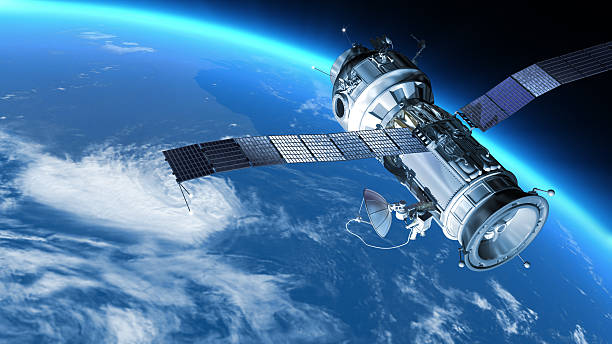
Space science is one of the most fascinating and rapidly evolving areas of modern research. It focuses on understanding the universe beyond Earth, including planets, stars, galaxies, black holes, and cosmic phenomena. Advances in technology have allowed scientists to send satellites, telescopes, and spacecraft into space, leading to discoveries that were once unimaginable.
For students in physics, astronomy, engineering, and environmental science, space science offers a wide range of research opportunities. From studying distant galaxies to designing satellites that improve communication on Earth, space science research plays a crucial role in expanding human knowledge and technological innovation.
If you are searching for research topics related to space science, the key is to choose a topic that is both scientifically relevant and capable of answering important questions about the universe. Below are several important areas in space science where meaningful research can be conducted.
Astrophysics Research Topics
Astrophysics is a major branch of space science that studies the physical properties and behavior of celestial objects such as stars, planets, and galaxies. Researchers use physics and mathematics to understand how these objects form, evolve, and interact.
Some interesting research topics in astrophysics include:
- The formation and evolution of stars in different galaxies
- The physics behind neutron stars and pulsars
- Dark matter and its influence on galaxy formation
- The role of magnetic fields in stellar evolution
- Supernova explosions and their impact on cosmic structures
- Black hole formation and gravitational effects
- Stellar nucleosynthesis and element formation
- Observational studies of distant galaxies
Astrophysics research helps scientists understand how the universe works at a fundamental level.
Planetary Science and Planet Exploration
Planetary science focuses on studying planets, moons, asteroids, and other bodies within our solar system and beyond. Recent missions to Mars, Jupiter, and Saturn have opened new opportunities for research.
Some potential research topics include:
- Geological features of Mars and evidence of past water
- Atmospheric composition of gas giant planets
- Formation of planetary systems in the universe
- The possibility of life on Europa or Enceladus
- Asteroid composition and planetary defense strategies
- Climate systems on Venus and Mars
- Surface processes on the Moon
- Comparative analysis of terrestrial planets
Planetary research helps scientists understand how planets form and whether life may exist elsewhere in the universe.
Cosmology and the Origin of the Universe
Cosmology studies the origin, structure, and evolution of the universe as a whole. It addresses fundamental questions such as how the universe began and how it continues to evolve.
Relevant research topics include:
- The Big Bang theory and cosmic microwave background radiation
- Expansion of the universe and dark energy
- Formation of large-scale cosmic structures
- Early universe conditions and particle physics
- Galaxy clusters and gravitational interactions
- Cosmic inflation theory
- Observational evidence supporting cosmological models
- The fate of the universe in the distant future
Cosmology research provides insight into the largest-scale structures and processes in the universe.
Satellite Technology and Space Engineering
Space science is not only theoretical; it also involves advanced engineering that enables space exploration. Satellites, spacecraft, and telescopes play essential roles in collecting scientific data.
Possible research topics include:
- Satellite communication technologies and global connectivity
- CubeSat development for small satellite missions
- Spacecraft propulsion systems for deep space exploration
- Satellite-based Earth observation systems
- Space debris monitoring and mitigation techniques
- Artificial intelligence in satellite operations
- Spacecraft thermal control systems
- Autonomous navigation systems for spacecraft
Research in this area contributes to technological advancements that support both space exploration and everyday services on Earth.
Space Exploration and Human Spaceflight
Human exploration of space continues to grow with missions aimed at returning to the Moon and eventually reaching Mars. Research in this area focuses on the challenges and technologies required for long-duration space missions.
Research topics may include:
- Human health effects of long-term space travel
- Life-support systems for space habitats
- Technologies for Mars exploration missions
- Radiation protection for astronauts
- Space agriculture for long-duration missions
- Psychological challenges of deep space missions
- Reusable rocket technology for cost reduction
- Space station design for future missions
These studies are essential for making human exploration of deep space possible.
Space Observation and Telescope Technology
Modern astronomy relies heavily on powerful telescopes and observation technologies. Ground-based and space-based telescopes allow scientists to study distant cosmic objects with incredible precision.
Possible research topics include:
- Advances in space telescope technology
- Adaptive optics for improving astronomical observations
- Detection of exoplanets using transit and radial velocity methods
- Infrared astronomy for studying star formation
- Radio telescope networks and deep space observation
- Data analysis techniques in astronomical surveys
- Machine learning applications in space observation
- Multi-wavelength astronomy for cosmic research
These topics help researchers observe and interpret phenomena occurring billions of light-years away.
Why Space Science Research Matters
Space science research does much more than satisfy human curiosity. It contributes to practical advancements that benefit life on Earth. Technologies developed for space missions have led to improvements in communication systems, weather forecasting, navigation technology, and environmental monitoring.
In addition, studying space helps scientists understand planetary climates, asteroid threats, and the long-term future of Earth. These insights are crucial for both scientific progress and global safety.
Conclusion
Space science remains one of the most exciting fields for scientific exploration and discovery. As technology continues to advance, researchers are gaining unprecedented access to the universe and uncovering answers to questions that humanity has asked for centuries.
The research topics related to space science discussed in this article provide students and scholars with meaningful directions for academic investigation. Whether focusing on astrophysics, planetary exploration, cosmology, or satellite engineering, space science research offers endless opportunities to contribute to our understanding of the universe.
Frequently Asked Questions (FAQs)
1. What are research topics related to space science?
Research topics related to space science include astrophysics, planetary science, cosmology, satellite technology, space exploration, astronomical observation, and spacecraft engineering.
2. Why is space science an important research field?
Space science helps scientists understand the universe, develop advanced technologies, improve satellite communication, and explore possibilities for future human space exploration.
3. Which academic disciplines study space science?
Space science is studied in fields such as astronomy, astrophysics, aerospace engineering, physics, planetary science, and cosmology.
4. How do students choose a good space science research topic?
Students should select topics that align with current discoveries, emerging technologies, and scientific questions that can be investigated using observations, simulations, or theoretical models.
5. What are emerging trends in space science research?
Emerging trends include exoplanet discovery, Mars exploration missions, reusable rocket technology, space tourism, AI-assisted astronomical observation, and deep-space exploration technologies.